If your teenager has been diagnosed with POTS (Postural Orthostatic Tachycardia Syndrome), you may feel like your entire family has been thrown into a world you never expected.
Maybe your child used to run around all day, play sports, ride horses, participate in activities, and keep up with their friends. Now, simply standing up can bring on a racing heart, dizziness, weakness, or the feeling that they’re going to pass out.
Then there is the brain fog. The fatigue. The headaches or migraines. The difficulty concentrating at school. The frustration of missing activities they love.
And after appointment after appointment, many parents are left with a list of things to manage — drink more fluids, increase salt, exercise when possible, change positions slowly, and monitor symptoms.
Those strategies can be important pieces of managing POTS. But as parents, it’s also natural to ask:
Why is my child’s nervous system struggling to regulate in the first place?
At Perfect by Design Chiropractic, we believe that question deserves attention.
Our approach is to look beyond a single symptom and evaluate how the nervous system is functioning as a whole.
When Your Child’s World Changes Overnight
POTS can be incredibly disruptive for teenagers and young adults.
A child who was once independent may suddenly need help getting through a normal day. School becomes harder. Sports and extracurricular activities may disappear from the schedule. Social events can become exhausting.
And because many of these symptoms aren’t visible from the outside, children with POTS can sometimes feel misunderstood.
They’re not simply “tired.”
They’re not being dramatic.
And they’re certainly not imagining what they’re experiencing.
Their autonomic nervous system plays an important role in regulating involuntary functions such as heart rate, blood pressure, digestion, and the body’s response to changes in position.
When that system isn’t adapting well, everyday activities can feel anything but ordinary.
POTS and the Autonomic Nervous System
POTS is one form of dysautonomia, a term used to describe conditions involving dysfunction of the autonomic nervous system.
The autonomic nervous system is constantly working behind the scenes. It helps your body respond appropriately when you stand up, exercise, sleep, digest food, experience stress, or encounter changes in your environment.
For most people, these adjustments happen automatically.
For someone with POTS, changing from lying down or sitting to standing can trigger an exaggerated increase in heart rate along with symptoms such as lightheadedness, fatigue, weakness, brain fog, headache, or exercise intolerance.
This is why looking at the nervous system can be such an important part of the conversation.
Instead of asking only, “What symptom are we trying to manage?”, we can also ask:
“How well is this nervous system adapting?”
The Brain-Body Connection Matters
One of the most important communication pathways in the body is the vagus nerve.
The vagus nerve connects with the brainstem and communicates with organs throughout the body. It plays an important role in parasympathetic regulation, including aspects of heart rate, digestion, and the body’s ability to shift out of a stress response.
That doesn’t mean POTS can be reduced to a “vagus nerve problem.”
POTS is complex, and researchers recognize multiple potential mechanisms and subtypes. But understanding the relationship between the brain, spinal cord, autonomic nervous system, and the rest of the body can provide an important additional perspective for families searching for answers.
At Perfect by Design Chiropractic, that neurological perspective is central to how we evaluate our patients.
Why We Look at the Bigger Picture
There isn’t always one obvious event that explains why a young person develops autonomic dysfunction.
Sometimes parents can point to a specific turning point — an illness, infection, major stressor, injury, or period of significant physical change.
Other times, the story is much more gradual.
That’s why we don’t want to look at POTS in isolation.
We want to understand the whole story.
That includes things like:
- Pregnancy and birth history
- Previous injuries or physical stress
- Illnesses and infections
- Sleep patterns
- Digestive concerns
- Stress and lifestyle factors
- Exercise tolerance
- Posture and spinal history
- The onset and progression of symptoms
- What your child’s nervous system is doing today
None of these factors automatically “cause” POTS. But they can provide valuable context when we’re trying to understand the individual in front of us.
Why Symptom Management Isn’t the Whole Conversation
Increasing salt intake and changing positions slowly can help manage symptoms in the moment, but they don’t address the root cause. Medications may manage heart rate, but they don’t restore autonomic balance. Cardiology testing tracks numbers, but it doesn’t map neurological function.
Without ever measuring the nervous system itself, care remains reactive rather than restorative — and families end up trying more of the same, hoping something finally works.
At Perfect by Design Chiropractic, we believe families can benefit from asking a broader question:
What is happening with the nervous system’s ability to adapt?
That’s where our neurologically focused approach comes in.
Measuring the Nervous System With INSiGHT Scans
This is where INSiGHT Scans change the conversation. These scans measure autonomic function objectively — using sEMG, HRV, and neuroTHERMAL technology — to pinpoint exactly where subluxation and dysautonomia are showing up in your child’s nervous system.
From there, Neurologically-Focused Chiropractic Care works to restore balance to the Autonomic Nervous System and vagus nerve. Care plans at Perfect by Design are built around each child’s unique scan patterns and history, and progress is tracked over time — not guessed at.
Alongside care, simple daily foundations still matter: hydration, electrolytes, quality sleep, and movement all support the healing process.
Neurologically Focused Chiropractic Care
At Perfect by Design Chiropractic, our goal isn’t to chase symptoms.
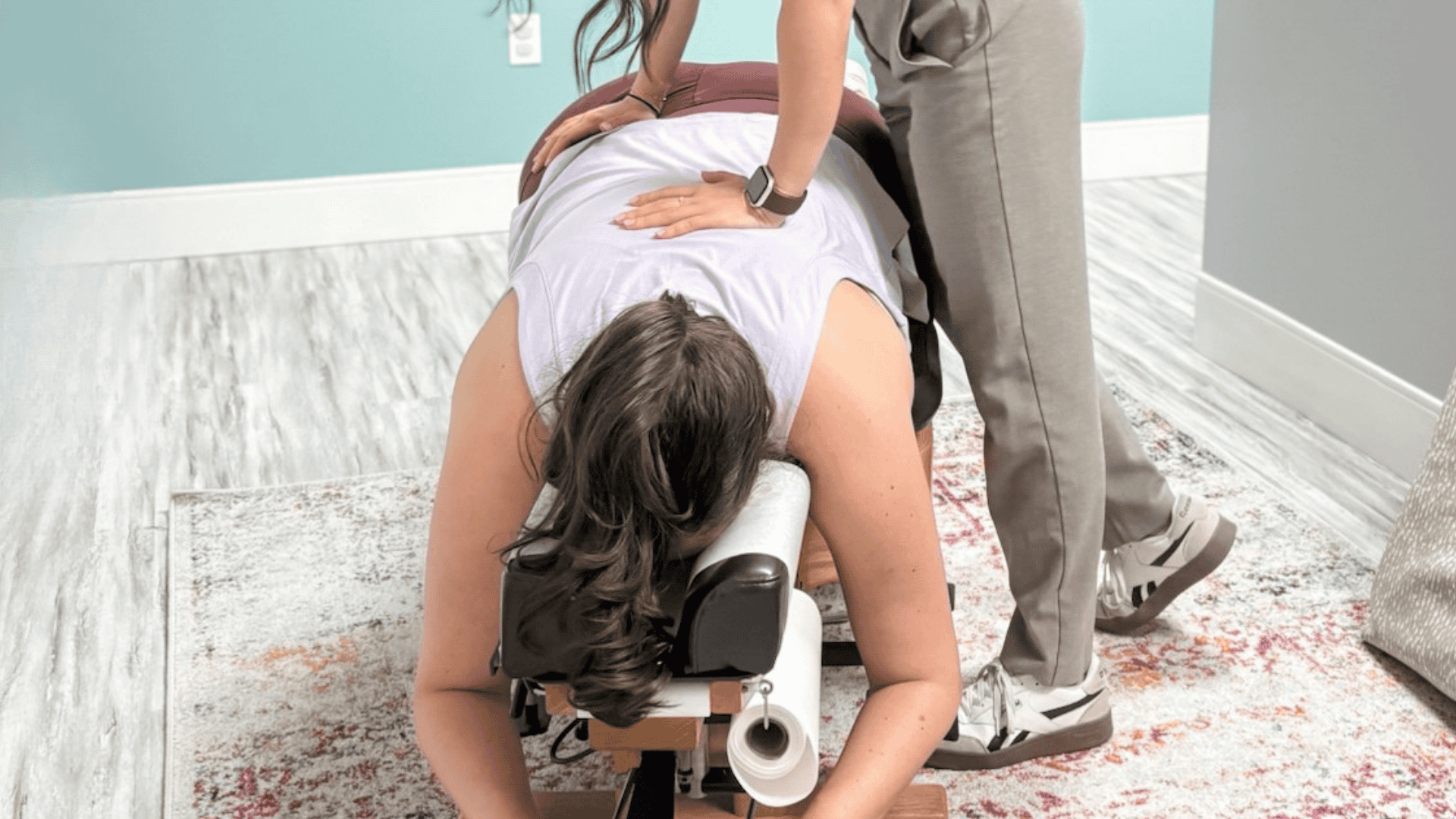
Our doctors use a gentle, neurologically focused approach designed around each patient’s individual history and exam findings.
For a teenager dealing with POTS or dysautonomia, that means their care shouldn’t look exactly like anyone else’s.
Your child’s history matters.
Their nervous system patterns matter.
Their current level of adaptability matters.
And their progress matters.
That’s why we use objective assessments throughout care rather than assuming that one person’s experience will look like another’s.
Your Child Is More Than a Diagnosis
A POTS diagnosis can become all-consuming.
Suddenly, everything revolves around heart rate, symptoms, appointments, medications, school accommodations, and figuring out what your child can or cannot tolerate that day.
But your teenager is still a whole person.
They’re still the athlete.
The musician.
The student.
The friend.
The sibling.
The kid who wants to feel like themselves again.
At Perfect by Design Chiropractic, we want to help families zoom out and look at the bigger picture.
We’re here to ask better questions, evaluate the nervous system, track objective information, and work alongside the other professionals involved in your child’s care.
You Don’t Have to Stop Looking for Answers
If your teenager is struggling with POTS, dysautonomia, dizziness, fatigue, brain fog, or difficulty adapting to everyday demands, you don’t have to choose between managing symptoms and learning more about how their nervous system is functioning.
There may be more information worth uncovering.
At Perfect by Design Chiropractic, we work with children, teens, and families using a neurologically focused approach to chiropractic care.
If you’re ready to learn more about your child’s nervous system, contact Perfect by Design Chiropractic to schedule an evaluation.
We’ll listen to your story, assess your child’s nervous system, and help you understand what we’re seeing — so you can make informed decisions about the next step in your child’s care.