
You’ve bought the calming gummies, downloaded the kids’ meditation app and set up a cozy sensory corner. Maybe things improved for a while, and then the progress quietly faded. If you keep noticing signs of nervous system dysregulation in kids like yours, even after all that effort, it may be time to ask a different question: what if the order of the plan is the missing piece?
At Perfect by Design, we put it simply. A nervous system that needs repair usually can’t be breathed, talked or supplemented into lasting calm. Repair comes first, and regulation works best after it.
That isn’t a knock on anything you’ve tried. It’s a way to finally understand why so many good efforts haven’t stuck.
When Good Tools Stop Working
We genuinely love regulation tools. Deep breathing, yoga, cleaner eating, quality supplements, functional medicine and sensory strategies all earn their place, and we cheer on every family who uses them.
Still, there’s a phrase we hear in our offices almost every week: “Nothing we try seems to last.” A new routine helps for a month. Then sleep slips, the tummy aches return, the worry creeps back and the big reactions show up again. It can feel like your family is stuck on a loop.
If you’d like a refresher on what dysregulation looks like day to day, our earlier article, What Does Nervous System Dysregulation Look Like?, walks through the common patterns. This post picks up where that one ends: why those patterns tend to hang on.
Repair and Regulation Are Two Different Jobs
Nervous system repair means addressing dysfunction inside the system itself: the interference left behind when stress and trauma pile up faster than a child can process them. In chiropractic, that interference is called subluxation.
Nervous system regulation for kids is a separate job. It covers the habits and practices that help an already-healthy system downshift into calm, such as breathwork, mindfulness, cold exposure and targeted nutrition.
Here’s an analogy we like. Repair is the mechanic’s work under the hood. Regulation is the driver learning to brake gently and take curves smoothly. Good driving habits matter, but they can’t make up for an engine that keeps stalling.
Or picture the wiring behind your walls. If a circuit is damaged, plugging in more appliances just trips the breaker sooner. Someone has to fix the circuit before the new gadgets can do their job.
Stress Gets Stored, Not Just Felt
A rough day, a chemical exposure or an emotional overload rarely stays in a child’s thoughts. As chiropractors, we see stress and trauma held in the body too: in the joints and tissues of the spine and the nerves running through them, often without anyone realizing it. We call that whole network the neurospinal system.
When a body senses more than it can handle, it switches into protection. In the moment, that’s perfect design. The trouble starts when protection becomes the default setting and lingers for months or years after the original stressor is gone.
A child’s body has a hard time growing and guarding at the same time. A child with a dysregulated nervous system can stay locked in that guarded, fight-or-flight pattern we call sympathetic dominance.
In that state, willpower, meditation and supplements only reach so far. Stress held in the brainstem, vagus nerve and spine doesn’t respond to a pep talk, and spinal patterns that may trace back to birth rarely dissolve with a few deep breaths.
How the Stress Stacks Up Early
We often explain this with an idea called the Perfect Storm: a series of early stressors that land on a young nervous system, one on top of another.
- Stress during pregnancy, including high maternal anxiety or certain medications
- Birth interventions such as C-sections (now roughly 1 in 3 U.S. births), vacuum assistance, forceps or induction, each of which can put physical strain on a newborn’s brainstem and upper neck
- Early struggles like colic, reflux and constipation, which can be signals of a nervous system working overtime
- Repeated rounds of antibiotics, often for ear infections, which research has linked with higher rates of allergies, asthma and gut trouble later in childhood
Each layer adds to the last. A child who has weathered several can end up with a nervous system so tightly locked that surface-level tools can’t get underneath. Those tools aren’t wrong. The stress simply sits deeper than they were built to reach.
Signs of Nervous System Dysregulation in Kids That Point to Repair
These patterns tell us a child may need repair before regulation can hold:
- Therapies help briefly, then the gains slip away
- Gut protocols work at first and then stall
- Progress keeps getting interrupted by setbacks
- Small triggers spark outsized reactions
- Calm doesn’t last, even right after a soothing activity
If this list feels familiar, please know you haven’t failed your child, and your child hasn’t failed either. The system may simply need a different first step.
Measuring Instead of Guessing: The INSiGHT Scan
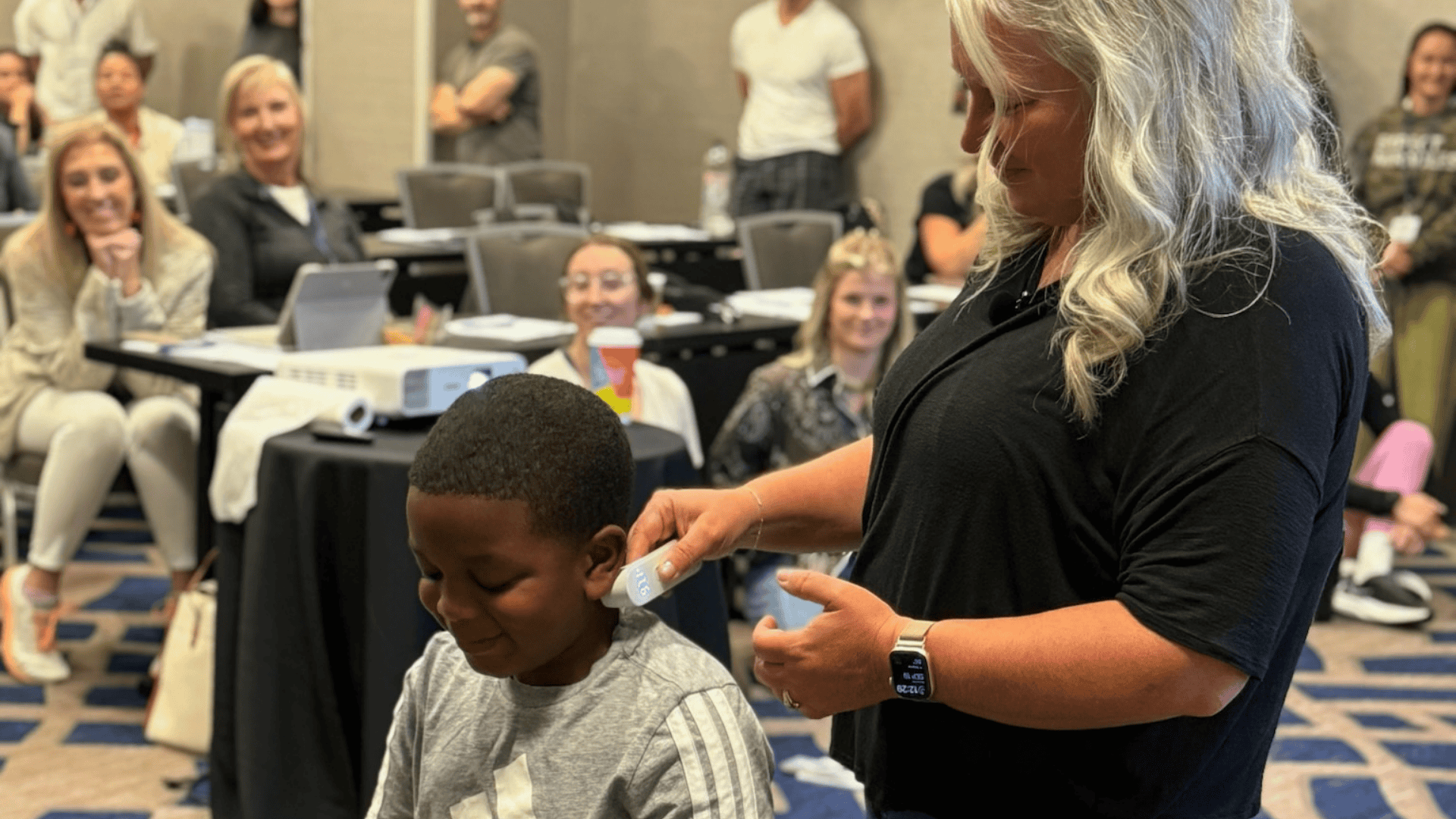
Parents often ask whether there’s a way to actually measure how a child’s nervous system is doing. There is, and it’s part of how we begin. Our INSiGHT scans include heart rate variability (HRV), which shows how well the nervous system shifts between stress and rest, along with surface EMG and thermal readings along the spine.
Together, these readings help our doctors see where tension is being held and how much adaptability your child has in reserve.
From there, gentle, specific Neuro-Tonal Adjustments are designed to help release that stored stress so the body can shift out of protection and back toward growth. For children with more complex needs, our Neuro-Intensive Program offers a structured plan with more frequent visits.
What Often Changes After Repair
Here’s the hopeful part. Once the nervous system has been supported back into a calmer, more ready state, families often tell us that what they were already doing starts to pay off:
- Breathing exercises seem to land better
- Supplements seem to do more of what they were meant to do
- Food changes make a bigger, steadier difference
- The body’s own healing ability has more room to work
Repair doesn’t replace regulation. It makes room for it. And it always works alongside the care your child already gets from their pediatrician and therapists.
Close to Home in Douglasville
If you’re looking for a pediatric chiropractor in Douglasville, GA, our Douglasville office near Arbor Place Mall, with plenty of free parking, welcomes families from all over the area.
Ready to Find Out Whether Repair Is the Missing Piece?
If this sounds like your family, we’d love to talk. Schedule an INSiGHT scan with our doctors. Just off I-20, our Douglasville team loves welcoming families from Temple, Villa Rica and Austell. Visit one of our three offices in West Cobb, Smyrna or Douglasville, or book at perfectchiro.com.
We can’t wait to help you discover what your child’s nervous system has been trying to tell you.
Written by Dr. Dawn Thomas
Dr. Thomas is certified in pediatric and family care through The Pediatric Experience (PX) and serves on the PX Teaching Team. Dr. Thomas provides neurologically-focused chiropractic care for families at the Perfect by Design Douglasville office.