

It starts small. “Shoes on, please.” Sixty seconds later, the whole morning has become a battle over sneakers.
You’ve heard the advice. Be firmer. Stay calm. Be more consistent. You’ve done all of it, over and over, and you’re still bracing for the next blowup. If you’re living with oppositional defiant disorder in kids, whether it’s a fresh diagnosis or one you suspect is coming, start here: this is not a parenting failure. You’re a loving parent who has gathered plenty of labels and very few explanations. You deserve to understand what’s going on underneath.
What an Oppositional Defiant Disorder Diagnosis Can and Can’t Tell You
A diagnosis names the daily struggle, and that alone can feel like a relief. Still, many parents leave the appointment wondering the same thing they wondered on the way in: why does an ordinary request set off alarm bells in my kid, when other children hear “no” and shrug it off?
How ODD Is Defined
Under the DSM-5-TR, clinicians look for a six-month pattern of irritable or angry moods, frequent arguing or refusing, and vindictive behavior, directed at someone besides a brother or sister (StatPearls). Severity is rated by how many settings it appears in: home, school, or out in the world.
Parents often overlook how much that matters. A kid who keeps it together through the school day and unravels in the kitchen at 4 p.m. is often a child who finally feels safe enough to let go. Diagnostic criteria describe what behavior looks like. They don’t explain where it comes from.
Oppositional Defiant Disorder in Kids by the Numbers
- It’s more common than it feels. The DSM-5-TR puts the prevalence of ODD at about 3.3% (StatPearls).
- It rarely travels alone. ADHD is the most common companion diagnosis, and anxiety and mood struggles often show up as kids get older (AACAP).
- The label often changes over time. Roughly two-thirds (about 67%) of kids diagnosed with ODD no longer fit the criteria three years later (AACAP). That can be encouraging, but many families find the underlying struggle simply changes shape, which is one reason to look underneath the label now rather than waiting.
The Gas Pedal and Brake Pedal Inside Your Child
When we explain the nervous system to parents, we use a car with two pedals:
- Gas (sympathetic). Fight-or-flight mode: on guard, tense, ready to react.
- Brake (parasympathetic). Guided in large part by the vagus nerve, this side lets a child calm down, digest, rest and bounce back.
A well-regulated kid can speed up for a soccer game and slow down for bedtime. When the gas stays floored, though, small moments (“Tablet off in five minutes”) can feel like danger. The escalation happens in the body before your child has a say in it. What you see is the overflow.
When a child stays stuck in fight-or-flight, it becomes a type of nervous system dysregulation in kids: a stress response tipped out of balance. Seen that way, a meltdown stops looking like a power play. It looks like a stressed system asking for help.
Same Diagnosis, Different Nervous Systems
Heart rate variability (HRV) gives a window into vagus nerve function. In general, more variability at rest points to a flexible system that recovers well.
We’ll be honest with you: the research here is mixed. A study of 8- to 12-year-old boys with ODD or conduct problems found faster resting heart rates than in other boys, yet group-level HRV looked similar. The interesting part was inside the group. Boys with reactive, in-the-moment aggression tended to run high at baseline and drop in HRV under stress, while a second group looked close to the reverse (Schoorl et al.).
So two kids sharing a diagnosis may have nervous systems that behave in completely different ways. That’s the reason we test rather than assume. Your child is a whole person, and care should fit them.
The Perfect Storm: How Early Stress Adds Up
At Perfect by Design, we call the stacking of early stressors the Perfect Storm. It often builds before a child ever starts school:
- Stress during pregnancy. Every pregnancy carries some stress, and much of it is out of a mom’s hands. Mama, if you feel a pang of guilt reading this, please set it down. This is about understanding your child’s story, never about blame.
- A difficult birth. A long labor, forceps, vacuum assistance or a C-section can put strain on the upper neck and brainstem, right where the vagus nerve begins its path.
- Early-life stressors. Repeated rounds of antibiotics, frequent illness, big family changes and sensory overload can keep nudging a child’s system toward the gas pedal.
Most parents spot a couple of these in their child’s history almost immediately. That moment often brings relief, because it swaps self-blame for a clearer picture.
Self-Regulation Strategies for Kids Work Better on a Regulated Nervous System
Behavioral therapy, parenting programs and medication decisions made with your child’s doctor all have a place. If you’ve put in the work with sticker charts, calm-down corners and therapy sessions and progress keeps leveling off, it isn’t because you did it wrong.
Stress and tension in the spine and nervous system are one factor we check. When parts of the spine are tense or not moving well, the brain may get less clear information from the body, and the brain leans on that information to decide whether the body is safe.
Every coping tool asks a child to pull up a skill in the heat of the moment. A nervous system stuck in survival mode can have a hard time reaching it, a bit like trying to drive with the parking brake on. Many families tell us those same tools feel more doable once their child’s nervous system has more support. Nothing you’ve tried was wasted.
A few strategies to try at home:
- Connect before you direct. Get down to eye level, soften your voice and make contact before giving an instruction.
- Give a heads-up before transitions. “Two more minutes, then shoes” is easier on a stressed system than a sudden switch. More ideas live in our post on what to do when every transition turns into a meltdown.
- Offer two choices you can live with. “Red cup or blue cup?” gives a sense of control without a battle.
- Add heavy work. Wall pushes, a bear-crawl race or carrying the grocery bags can help a busy body settle.
- Let your child borrow your calm. A few slow breaths before you respond helps their nervous system follow yours, which is the heart of emotional regulation in kids.
- Talk it through later. Save the lesson for after everyone has settled.
Measuring the Nervous System With INSiGHT Scans
At Perfect by Design, care starts with a detailed history and INSiGHT scans, neuroTECH developed by the Chiropractic Leadership Alliance (CLA):
- The neuroTHERMAL scan looks at autonomic function.
- The neuroCORE scan uses surface EMG to measure tension patterns along the spine.
- HRV gives us a read on the balance between the gas pedal and the brake pedal.
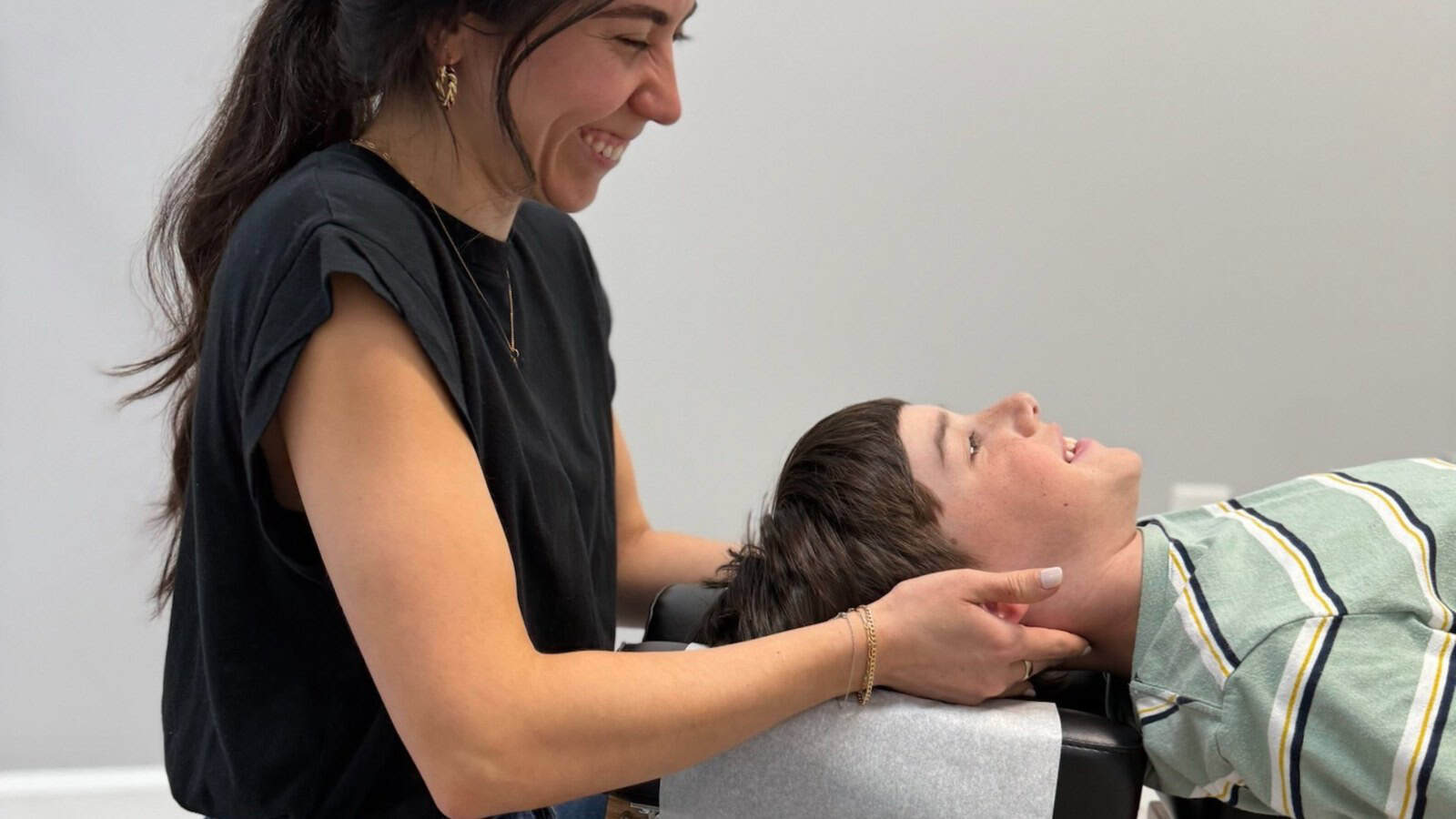
What INSiGHT scans offer is a picture of how your child’s nervous system is working, so our doctors can build a care plan of gentle adjustmentsaround your child rather than a label. For kids who need more support, we also offer a Neuro-Intensive option.
Questions Parents Ask
Is oppositional defiant disorder my fault as a parent?
No. ODD is not caused by one parenting mistake, and loving, consistent parents raise kids with ODD every day. Many factors can shape a child’s stress response, from pregnancy and birth to early illness and family changes. Understanding your child’s nervous system is about finding answers, not assigning blame.
Do kids grow out of ODD?
Many kids do. AACAP reports that roughly two-thirds of children no longer fit the ODD criteria three years after diagnosis. Some kids, though, go on to have other struggles such as ADHD, anxiety or mood challenges, so it’s worth looking at what’s driving the behavior rather than simply waiting.
How is ODD different from normal defiance?
Every child pushes back sometimes, and toddlers and teens are famous for it. ODD describes a pattern lasting six months or more, aimed at people beyond brothers and sisters, and causing real problems at home or school. A child stuck in fight-or-flight may push back far more often and more intensely.
Can a pediatric chiropractor help a child with ODD?
Our doctors use INSiGHT scans to look at how your child’s nervous system is regulating, then use gentle adjustments to support it. Many parents also come to us asking about a chiropractor for anxiety in kids, and our approach is the same.
Nobody Knows Your Child Like You Do
Maybe you’ve heard “just be more consistent” for years and started to doubt yourself. Let that go. A nervous system parked in stress mode is a physical state, and physical states can be measured and supported instead of simply survived.
You know the silly, curious, tender kid who appears when the house is calm. Hold on to that picture. Leading your child’s care isn’t about knowing everything. It’s about asking sharper questions and surrounding yourself with people who help you find the why.
Take the Next Step
More labels won’t help much. Real answers will. Whether your child has an ODD diagnosis or simply melts down more than they bounce back, our team would love to sit down with your family, hear your child’s full story and run INSiGHT scans.
Families from Douglasville, Temple, Villa Rica, Bremen and Austell visit Perfect by Design at our Douglasville office, in The Shoppes at Hillcrest, close to I-20 and Arbor Place Mall. You’ll find us at 3387 Georgia 5 Suite H Douglasville, GA 30135, or call (470) 348-8440.
We also care for families at our West Cobb office and Smyrna office.
New to Perfect by Design? Your first two appointments are $99 with our new-patient offer. Request an appointment at our Douglasville office.
You’re your child’s strongest advocate. Let’s find the why together.
Written by Dr. Pamela Pagán
Dr. Pam is PX Docs certified in pediatric and family care and Webster certified, and provides gentle, neurologically-focused chiropractic care for families at the Perfect by Design Douglasville office.